

Rollover Accidents on Western Slope Highways: Why These Crashes Turn Deadly So Fast
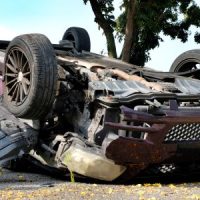
A fender bender on I-70 is stressful. A rollover crash is something else entirely. One moment a vehicle is upright and moving normally, and the next it is tumbling across pavement or off a shoulder, often leaving occupants with injuries far more severe than the average collision. Why do these crashes happen so often on our stretch of highway, and what makes them so dangerous compared to other types of accidents?
What Makes Western Colorado Roads Prone to Rollovers
Grand Junction, Montrose, and the surrounding Mesa County corridors combine several ingredients that raise rollover risk. Highways like I-70 and Highway 50 include steep grades, sharp curves, and long descents through canyon terrain. Add gravel shoulders, sudden crosswinds, and seasonal ice, and a driver has little margin for error at highway speed.
Vehicle type matters too. Pickups and SUVs, both common on the Western Slope for work and recreation, sit higher off the ground than sedans. That raised center of gravity makes them more prone to tipping when a driver overcorrects, swerves to avoid an animal, or takes a curve too fast. Loaded trucks hauling equipment for oilfield or agricultural work add even more instability if cargo shifts unexpectedly.
The Numbers Behind the Danger
Rollovers are not the most common type of crash, but they are disproportionately deadly. According to the National Highway Traffic Safety Administration, rollover crashes accounted for 28 percent of all passenger vehicle occupant fatalities in 2023, with the highest rollover fatality rates recorded among pickups and SUVs. That single statistic explains why these crashes deserve serious attention from drivers and policymakers alike, especially on rural roads where speeds tend to be higher and emergency response times longer.
Occupants who are fully belted are far more likely to stay inside the vehicle during a rollover, which significantly improves survival odds. Ejection remains one of the leading causes of death in these crashes, underscoring why seatbelt use is not just a suggestion but a genuine safety necessity on mountain roads.
Steps to Take After a Rollover Crash
If you are involved in a rollover, your first priority is medical attention, even if you feel fine at the scene. Adrenaline can mask serious injuries like internal bleeding or spinal damage for hours. Once you are safe, document the scene if possible, including road conditions, weather, and any visible vehicle damage. Rollover cases often hinge on questions of vehicle design, tire condition, cargo loading, or another driver’s negligence, so preserving evidence early can matter a great deal later.
It is also worth noting that liability in a rollover crash is not always limited to another driver. Depending on the circumstances, a trucking company, cargo loader, or even a vehicle manufacturer could share responsibility if a defect or improper loading contributed to the crash.
Rollover crashes leave many victims facing long recoveries, mounting medical bills, and difficult questions about what happened and who should be held accountable. If you or a family member has been hurt in a rollover accident in Grand Junction, Montrose, or elsewhere in Mesa County, our Grand Junction rollover accident lawyers at Killian, Davis & Richter, P.C. are ready to investigate what caused the crash and pursue the compensation you deserve. Call us at 970-241-0707 to talk through what happened.
Source:
crashstats.nhtsa.dot.gov/Api/Public/ViewPublication/813723.pdf